Recent Experimental QEC on Cold-Atom Systems

Transversal QEC on reconfigurable atom arrays

François-Marie Le Régent

Pasqal

July 2, 2026

When is Q-day?

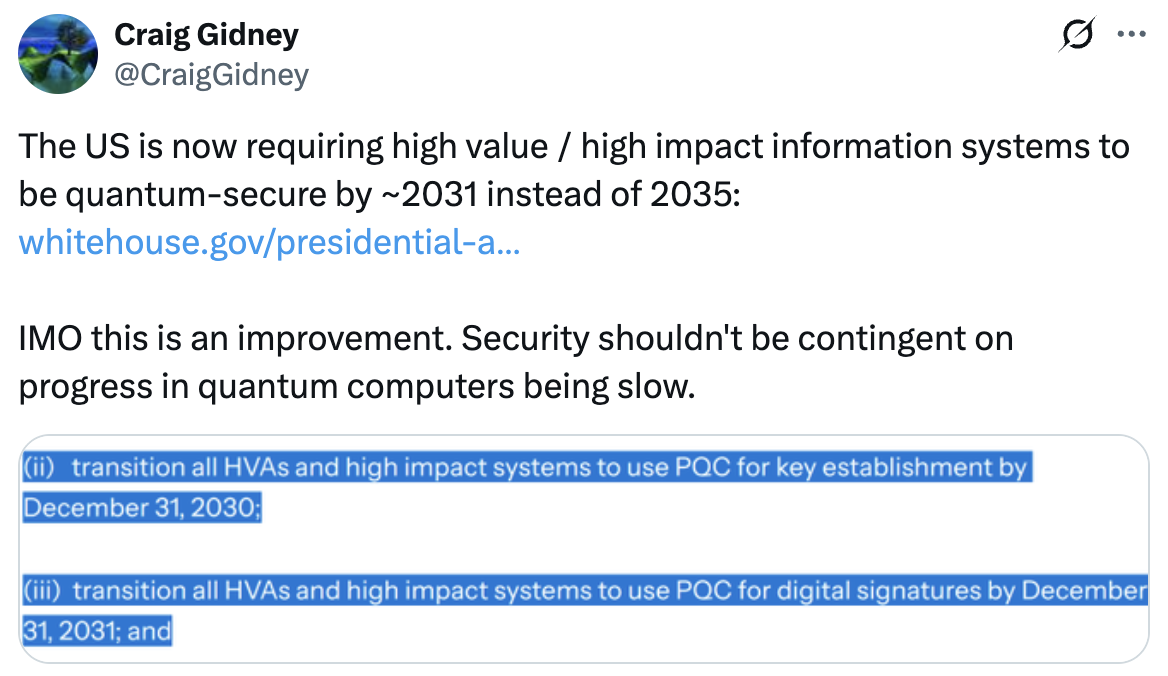
  1. Google, CloudFlare and others accelerating their post-quantum cryptography transitions: target 2029
  2. More on whether useful quantum computing is “imminent” : Scott Aaronson
    • multiple platforms now boasting >99.9% fidelity two-qubit gates, at or above the theoretical threshold for fault-tolerance.

Why 2029?

Recent Experimental QEC on Cold-Atom Systems

Rubidium, Ytterbium, Strontium, Cesium
Atoms are great

  1. Controllable 2D optical tweezer array via spatial light modulator (SLM)
  2. Atom shuttling via Acousto-Optical Deflectors (AOD)
  3. Arbitrary manipulation: Init. in \(\ket{0}\), 1Q/2Q gates, (slow \(\approx 1ms\)) \(Z\) meas. (\(\ket{0}, \ket{1}\), lost)

Protection via delocalization

How QEC works, cf this morning’s tutorials by Paul

Hypothesis

High-rate errors come from local physical processes

Solution

Encoding the information in non-local degrees of freedom protects it

How? Measure stabilizers

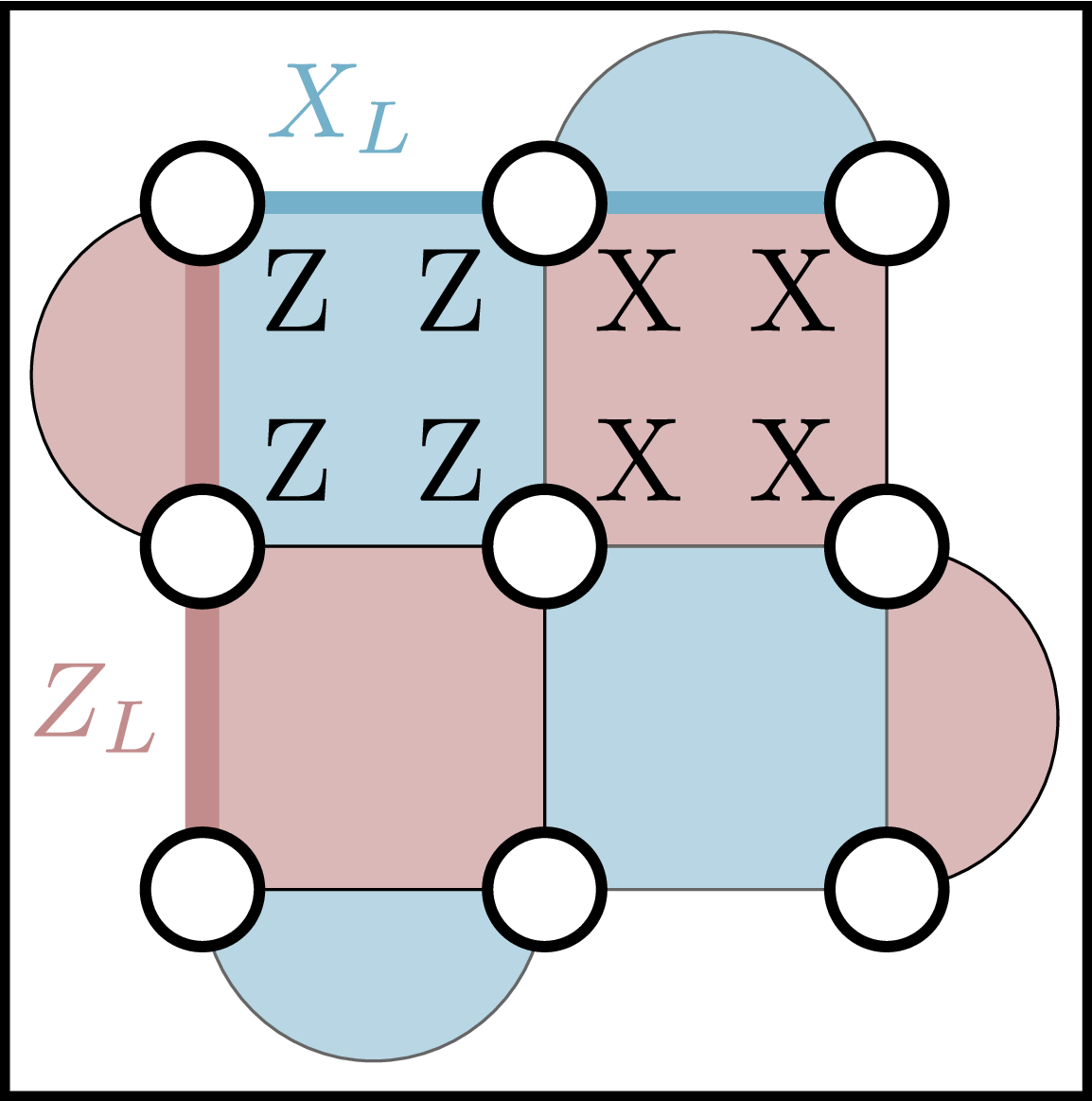
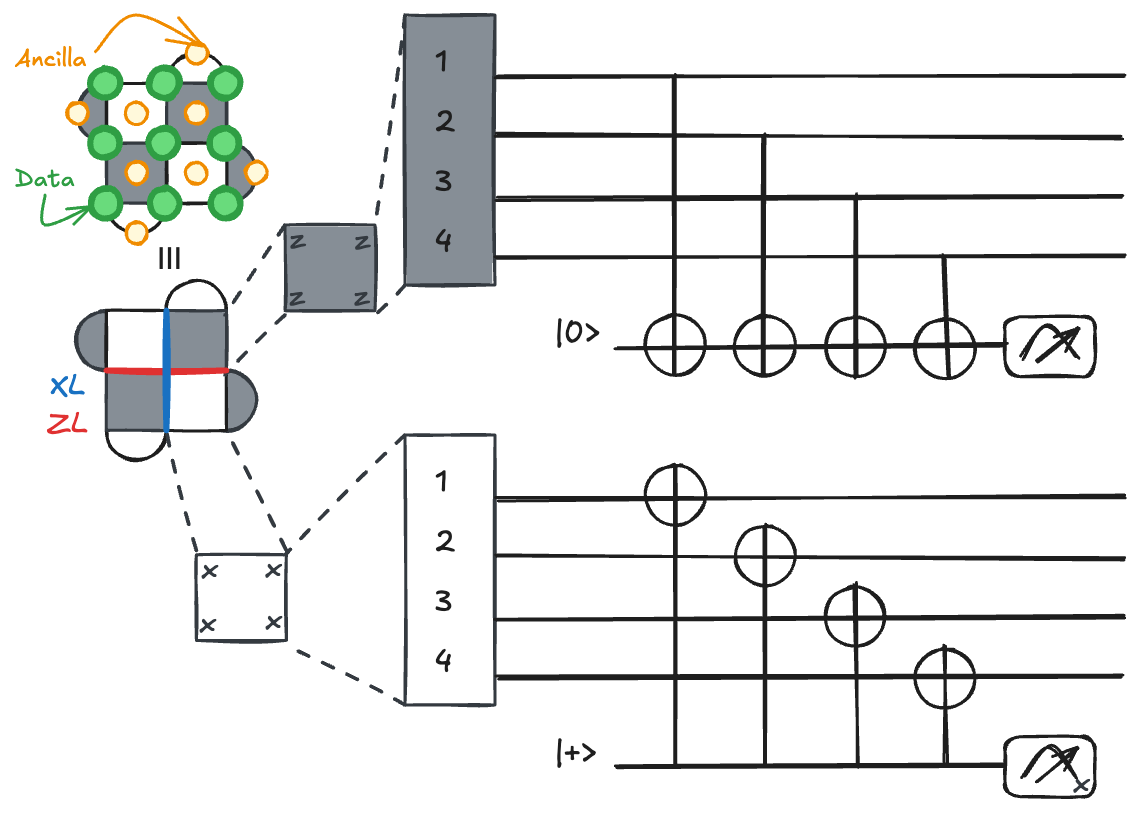
Multi-qubit Pauli product, e.g. \(ZZZZ\), \(XXXX\)

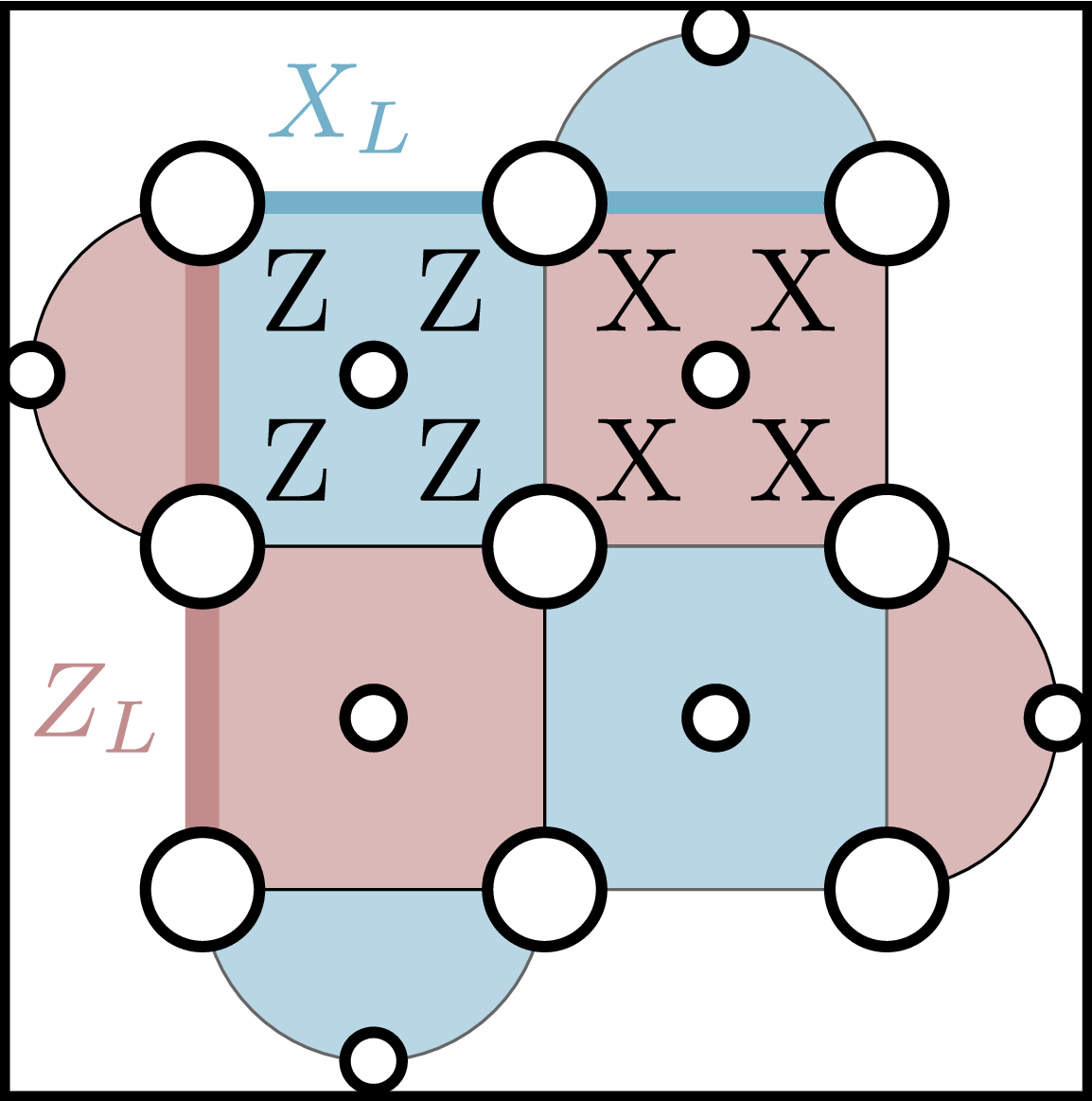
Example: Surface code

  • \(X_L\): All \(X\) along horizontal direction
  • \(Z_L\): All \(Z\) along vertical direction
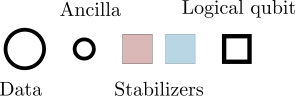
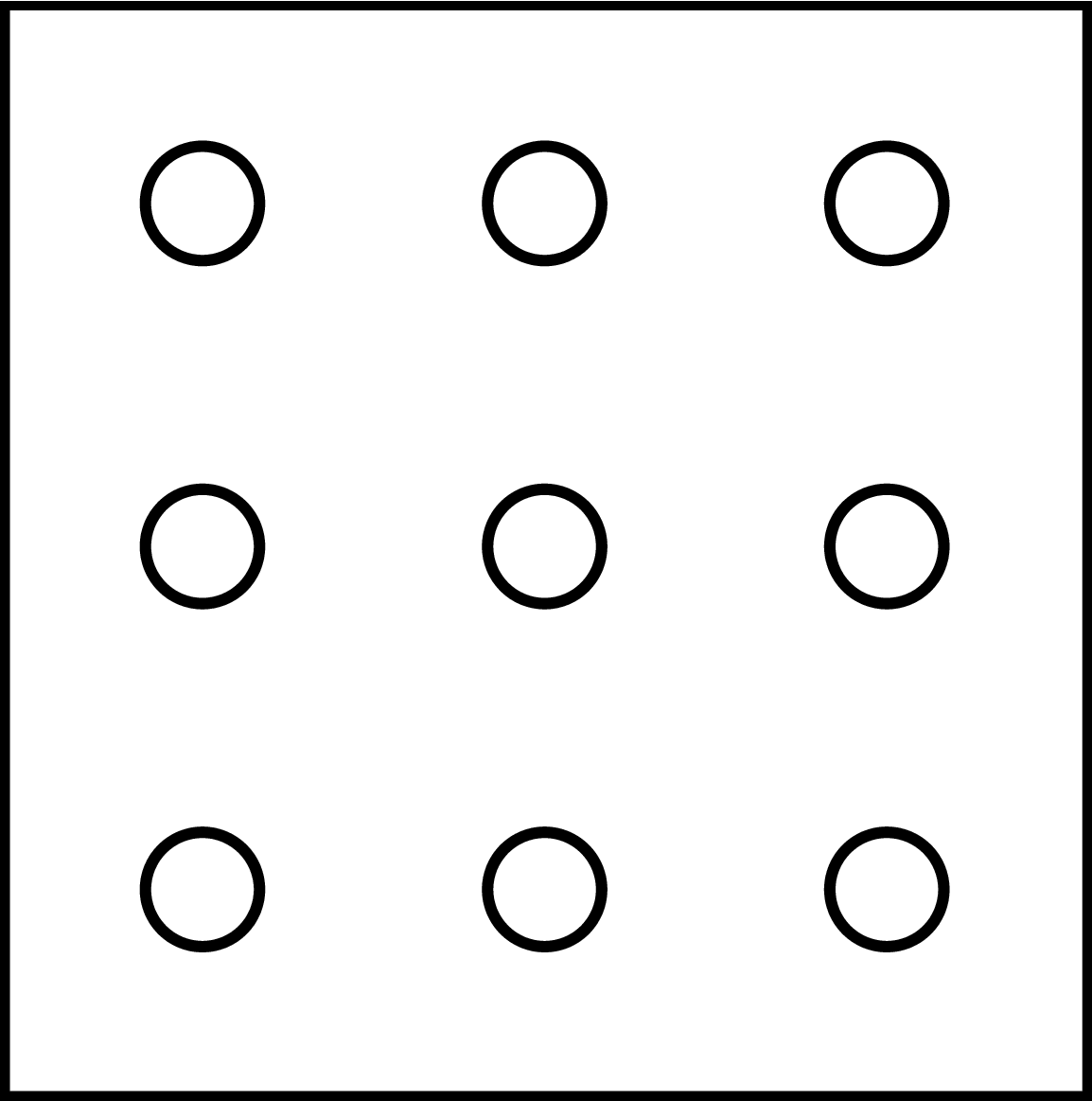
\(d=3\) Surface code layout and stabilizers.

\(d=3\) Surface code layout and stabilizers.

\(d=3\) Surface code layout and stabilizers.

Recent Experimental QEC on Cold-Atom Systems

From infinite-dimention Hilbert space to QEC qubit code
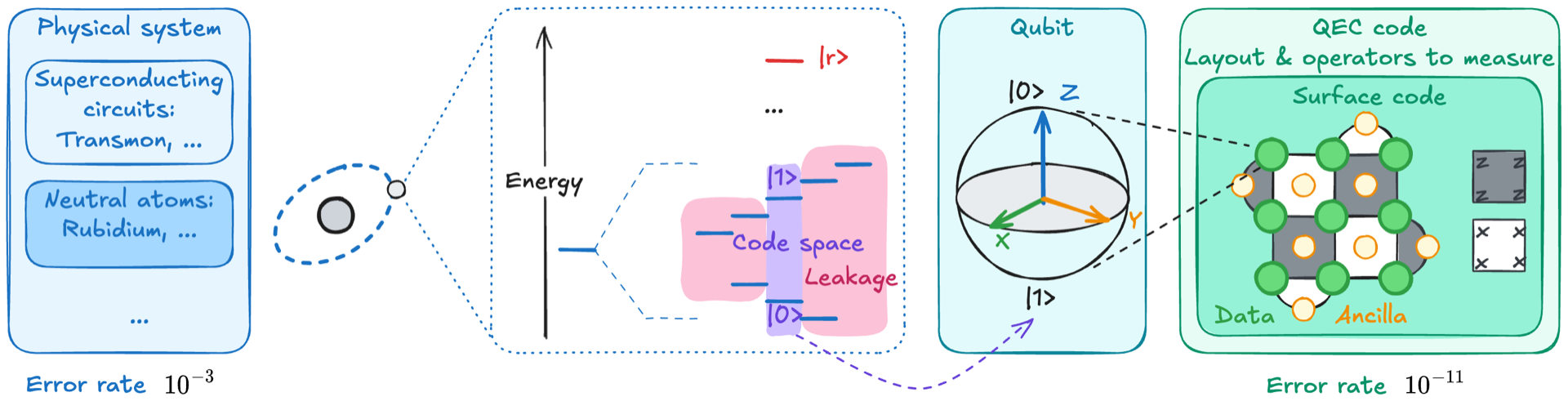
Goal

Encode a robust logical qubit out of many noisy physical qubits

Central challenge

Error rates must be driven down while the system is scaled up

Recent Experimental QEC not on Cold-Atom Systems

Google Quantum AI Surface code performance, Acharya et al. (2025)

  • \(CZ\) fidelity: \(99.7\%\)
  • \(1.1 \mu s\) cycle time (NA \(\approx 1000 \times\))
  • 250 QEC cycles
  • \(d=7\) surface code (\(\implies 7^2\) data + \(7^2-1\) ancilla \(\approx 100\) transmons)
  • Below threshold + below breakeven, \(\Lambda=2.14\)1

Next

The forever qubit, the qubit that never dies?
Recent Experimental QEC on Cold-Atom Systems

Architecture : running QEC on a moving array
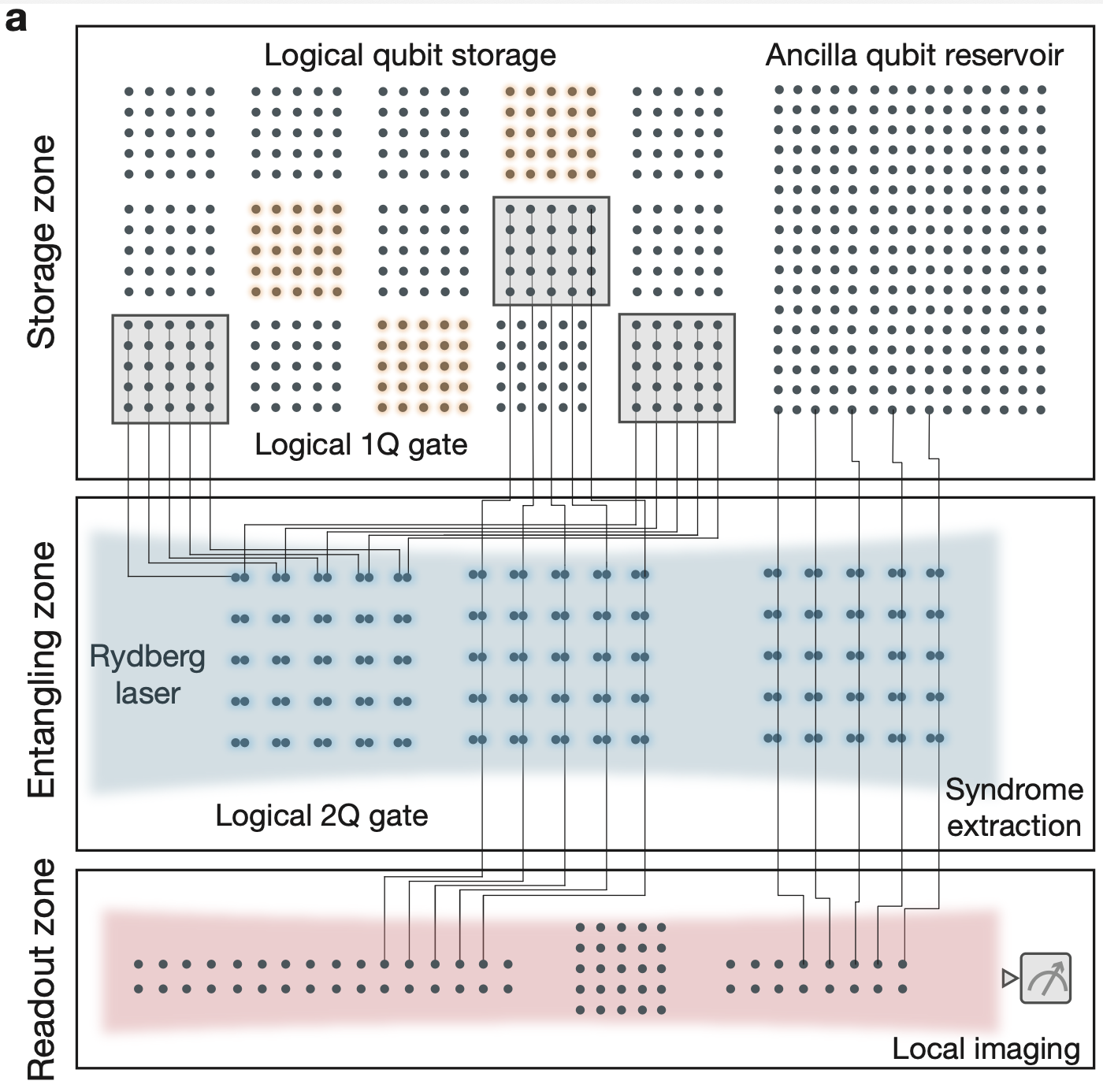
Zoned architecture

  • Storage (in \(\ket{0}\) and idle, reservoir), entangling (Rydberg) and readout (\(M_Z\)) zones
  • Atom shuttling by AODs between them (few \(10\mu m\) spacing)
  • Logical 1Q & 2Q operations realized transversally with efficient, parallel operations

Used a lot in litterature1

Recent Experimental QEC on Cold-Atom Systems

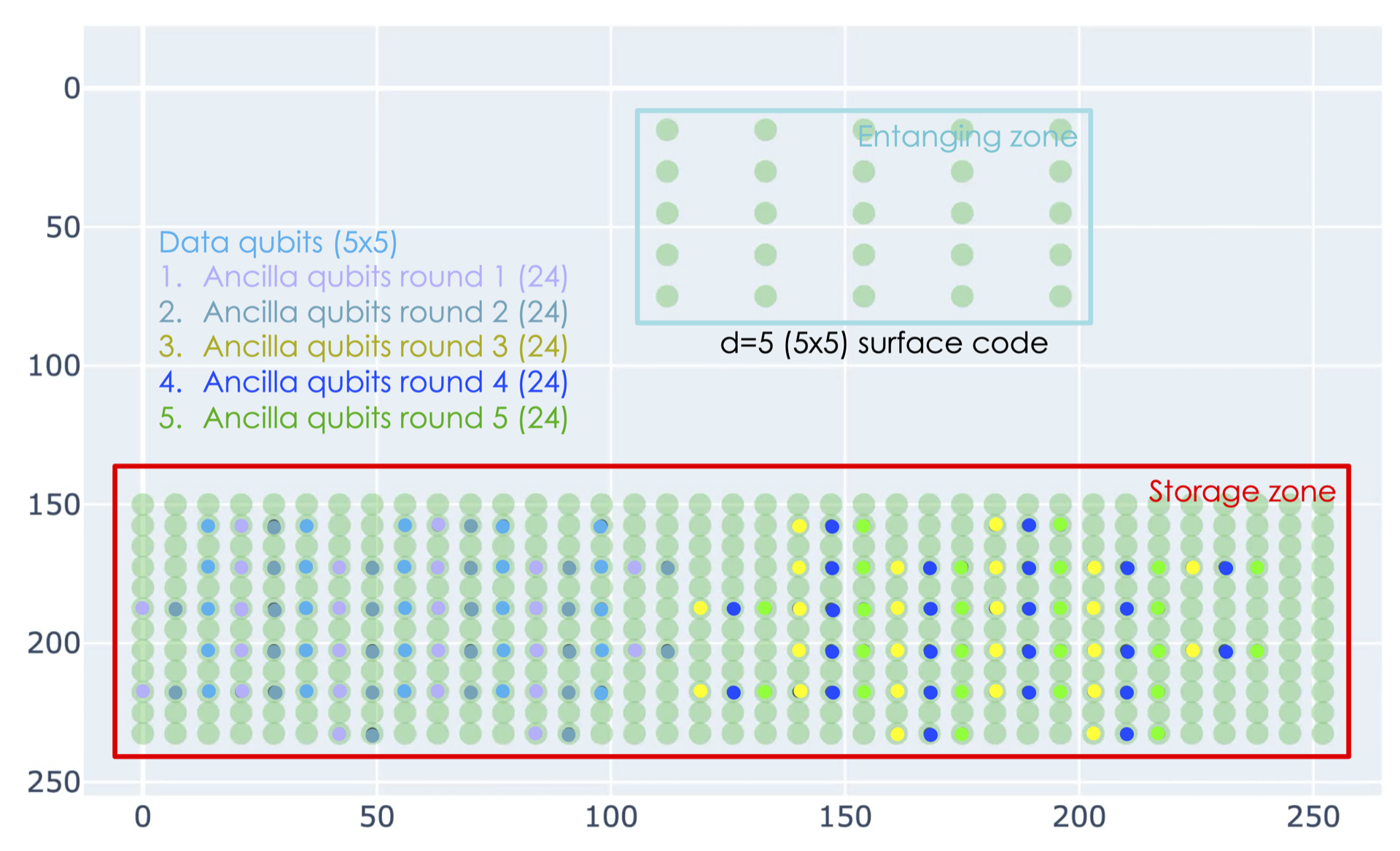
Example 1/2: \(d=5\) Surface code with 4 QEC cycles1
Recent Experimental QEC on Cold-Atom Systems

Example 1/2: \(d=5\) Surface code with 4 QEC cycles1

Steps

  1. Move data from SZ to EZ
  2. For ancilla patch 1 to 4
    1. Move current ancilla patch from SZ to EZ
    2. Perform stabilizer measurement
    3. Move back current patch (from EZ to SZ)
  3. Measure all qubits

Recent Experimental QEC on Cold-Atom Systems

Example 2/2: GHZ states on the Color code1
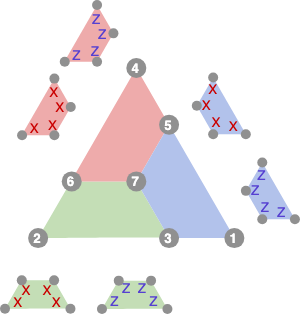
Stabilizer generators of the \([[7, 1, 3]]\) Steane color code.

Circuit for preparation of logical GHZ state. 4-logical-qubit GHZ state + ancillas for fault-tolerance

Recent Experimental QEC on Cold-Atom Systems

Example 2/2: GHZ states on the Color code1
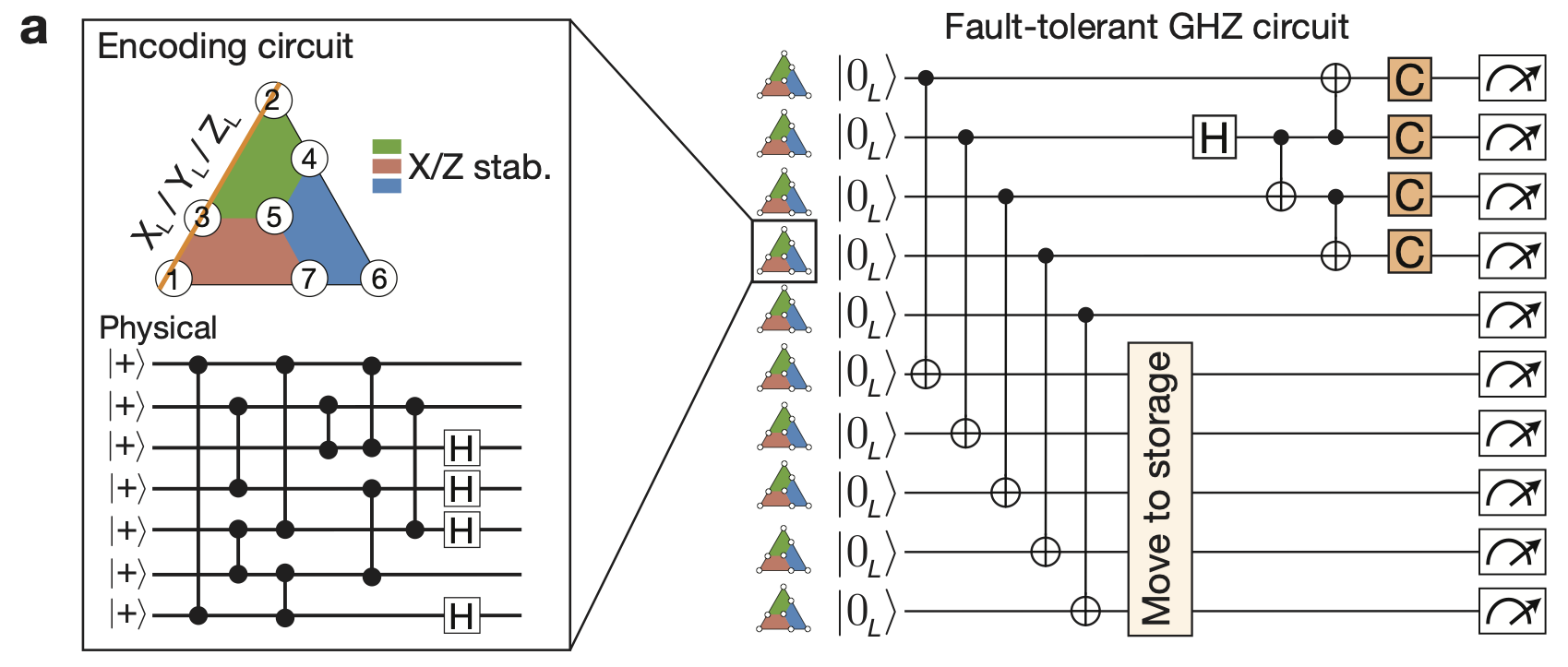
Stabilizer generators of the \([[7, 1, 3]]\) Steane color code.

Recent Experimental QEC on Cold-Atom Systems

State of the art

QEC codes leveraging non-local connectivity

  • Surface code:
    • \(2.14(13) \times\) below-threshold SC performance (4 rounds), cf Acharya et al. (2025) \(2.14\)
    • 90 QEC cycles on the toric \([[32, 1, 4]]\) code, Atom Computing (2026) (vs 250 Acharya et al. (2025))
  • 3D \([[8, 3, 2]]\):
    • 48 logical qubits, 228 2Q\(_L\) gates, 48 \(CCZ_L\) gates (error detection)
  • High-rate \(k/n\) codes: \([[16,6,4]]\), \(k/n=0,375\)
  • Qubit re-use \(\implies\) \(100 \times\) cycle rate (\(1ms\) vs \(1\mu s\))
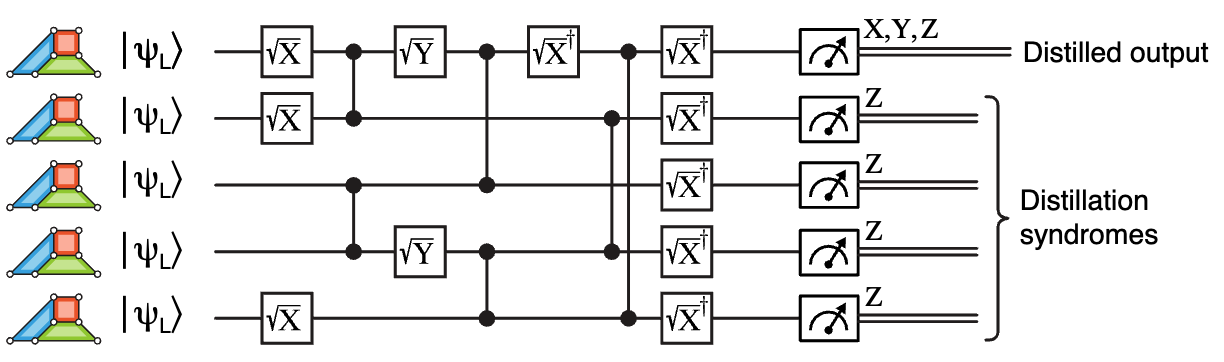
Not only quantum memories:

  • Arbitrary-angle synthesis Bluvstein et al. (2026)
  • 5-to-1 magic \(\ket{T}\) state distillation from \(98.9\%\) to \(99.4\%\) Rodriguez et al. (2024) (No teleportation vs Lacroix et al. (2024))

Conclusion 1/2

Atoms are great

  1. Controllable 2D optical tweezer array (SLM)
  2. Atom shuttling (AOD)
  3. Arbitrary manipulation: Init. in \(\ket{0}\), 1Q/2Q gates, (slow \(\approx 1ms\)) \(Z\) meas. (\(\ket{0}, \ket{1}\), lost)

Zoned architecture

  • Storage (in \(\ket{0}\) and idle, reservoir), entangling (Rydberg) and readout (\(M_Z\)) zones
  • Logical 1Q & 2Q operations realized transversally with efficient, parallel operations

Many POCs leveraging non-local connectivity

  • Ex: Surface code, color code (2D, 3D), …
  • Below-threshold, non-clifford (MSD)

Extracted from Bluvstein et al. (2024)

Conclusion 2/2

Full stack for Q-day 2029?

Application requirements: how to do Shor? ✅ 10-100k atoms Cain et al. (2026)

QEC codes \([[n, k, d]]\): how to get protected qubits and do logic? ✅ Bluvstein et al. (2026), qLDPC logic Zheng et al. (2025)

Decoders: what to do with all the measurement data? ✅ Loss-aware decoder Liu et al. (2026)

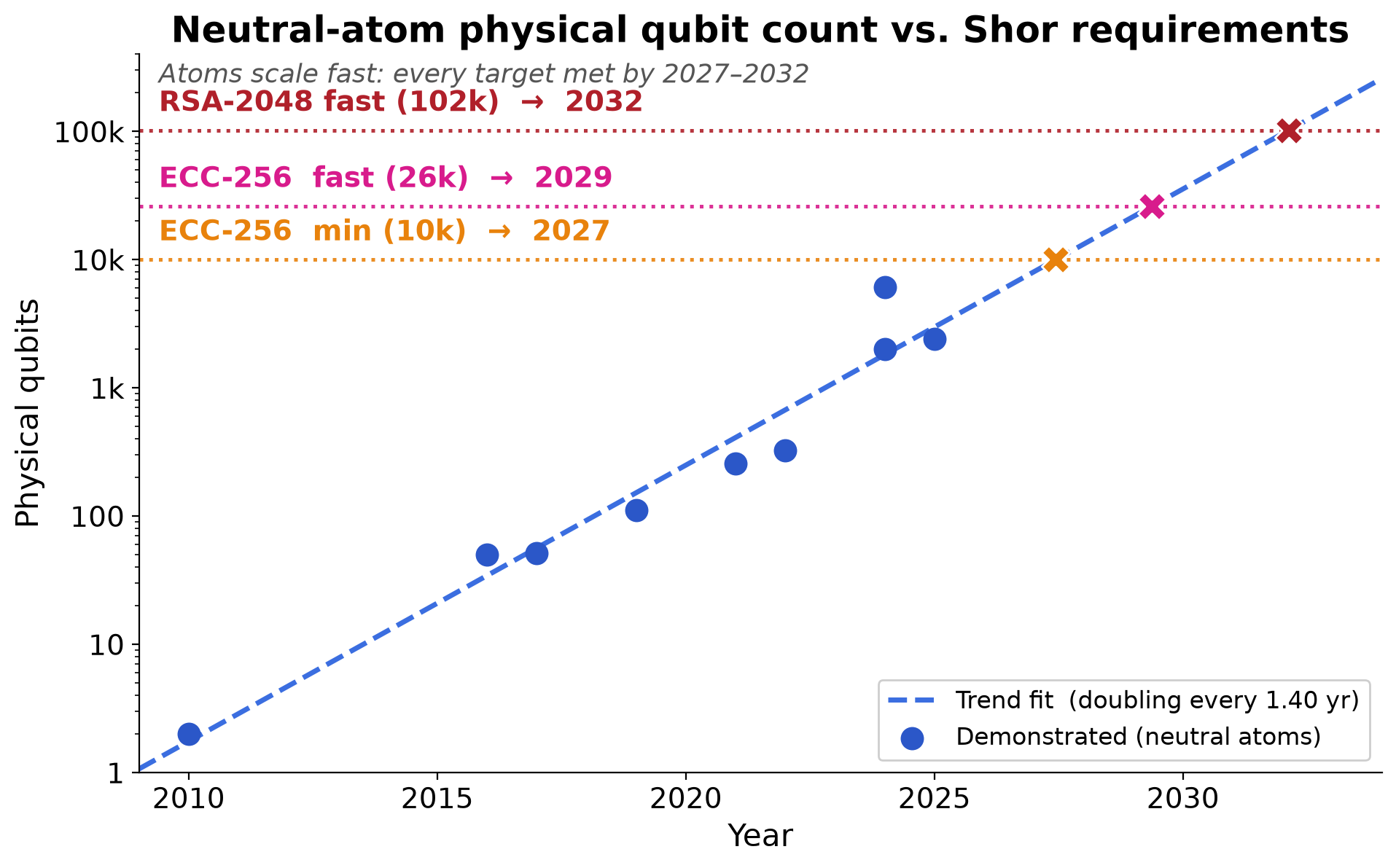
Qubit count: does it scale? ✅ 11k Wang et al. (2026), \(\times 2\) every 1.3y\(^1\)

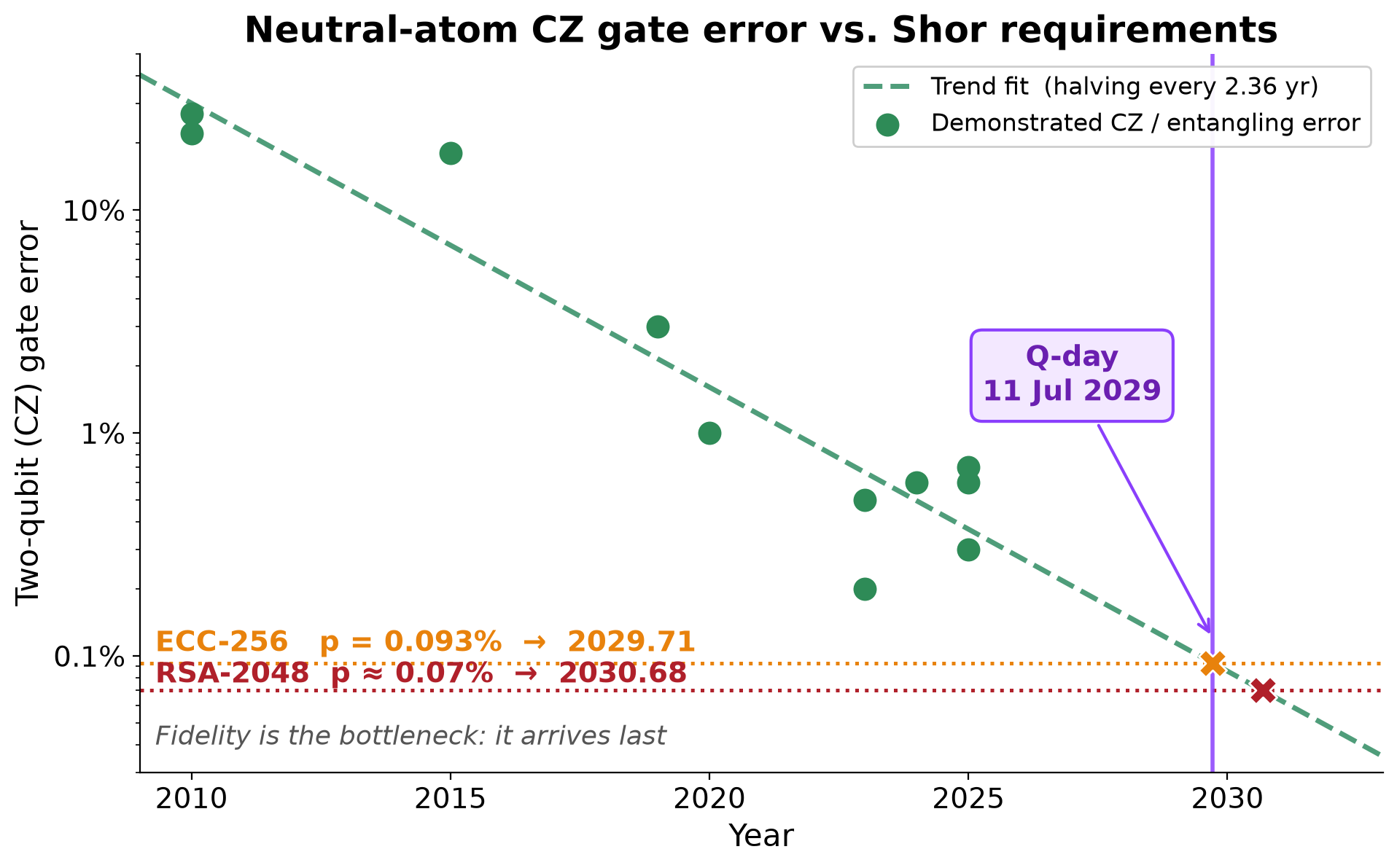
Entangling gate error (\(CNOT, CZ\)): do you entangle well? ✅ 99.9% Evered et al. (2026), \(/2\) every 2.2y1

Qubit times (\(T_1\), \(T_2\)): ✅ 10s Manetsch et al. (2024)

Thank you for your attention!

References

Acharya, Rajeev, Dmitry A. Abanin, Laleh Aghababaie-Beni, et al. 2025. “Quantum Error Correction Below the Surface Code Threshold.” Nature 638 (8052): 920–26. https://doi.org/10.1038/s41586-024-08449-y.
Atom Computing. 2026. “Quantum Error Correction with the Toric Code.” arXiv:2606.04079. Preprint, arXiv, June 2. https://doi.org/10.48550/arXiv.2606.04079.
Bluvstein, Dolev, Simon J. Evered, Alexandra A. Geim, et al. 2024. “Logical Quantum Processor Based on Reconfigurable Atom Arrays.” Nature 626 (7997): 58–65. https://doi.org/10.1038/s41586-023-06927-3.
Bluvstein, Dolev, Alexandra A. Geim, Sophie H. Li, et al. 2026. “Architectural Mechanisms of a Universal Fault-Tolerant Quantum Computer.” Nature 649 (8095): 39–46. https://doi.org/10.1038/s41586-025-09848-5.
Bluvstein, Dolev, Harry Levine, Giulia Semeghini, et al. 2022. “A Quantum Processor Based on Coherent Transport of Entangled Atom Arrays.” Nature 604 (7906): 451–56. https://doi.org/10.1038/s41586-022-04592-6.
Cain, Madelyn, Qian Xu, Robbie King, et al. 2026. “Shor’s Algorithm Is Possible with as Few as 10,000 Reconfigurable Atomic Qubits.” arXiv:2603.28627. Preprint, arXiv, March 30. https://doi.org/10.48550/arXiv.2603.28627.
Chiu, Neng-Chun, Elias C. Trapp, Jinen Guo, et al. 2025. “Continuous Operation of a Coherent 3,000-Qubit System.” arXiv:2506.20660. Preprint, arXiv, June 25. https://doi.org/10.48550/arXiv.2506.20660.
Evered, Simon J., Muqing Xu, Sophie H. Li, et al. 2026. “High-Fidelity Entangling Gates and Nonlocal Circuits with Neutral Atoms.” arXiv.org, April 28. https://arxiv.org/abs/2604.25987v1.
Gidney, Craig. 2025. How to Factor 2048 Bit RSA Integers with Less Than a Million Noisy Qubits. May 21. https://doi.org/10.48550/arXiv.2505.15917.
Gidney, Craig, and Martin Ekerå. 2021. “How to Factor 2048 Bit RSA Integers in 8 Hours Using 20 Million Noisy Qubits.” Quantum 5 (April): 433. https://doi.org/10.22331/q-2021-04-15-433.
Jin, Junlan, Yue Shi, Youssef Aziz Alaoui, et al. 2026. “Extended Rydberg Lifetimes in a Cryogenic Atom Array.” arXiv:2602.05959. Preprint, arXiv, February 5. https://doi.org/10.48550/arXiv.2602.05959.
Lacroix, Nathan, Alexandre Bourassa, Francisco J. H. Heras, et al. 2024. Scaling and Logic in the Color Code on a Superconducting Quantum Processor. December 18. https://doi.org/10.48550/arXiv.2412.14256.
Le Régent, François-Marie. 2025. Awesome Quantum Computing Experiments: Benchmarking Experimental Progress Towards Fault-Tolerant Quantum Computation. July 4. https://doi.org/10.48550/arXiv.2507.03678.
Li, Yiyi, Yicheng Bao, Michael Peper, Chenyuan Li, and Jeff D. Thompson. 2025. “Fast, Continuous and Coherent Atom Replacement in a Neutral Atom Qubit Array.” arXiv:2506.15633. Preprint, arXiv, June 18. https://doi.org/10.48550/arXiv.2506.15633.
Lin, Rui, Han-Sen Zhong, You Li, et al. 2024. AI-Enabled Rapid Assembly of Thousands of Defect-Free Neutral Atom Arrays with Constant-Time-Overhead. December 19. https://doi.org/10.48550/arXiv.2412.14647.
Liu, Pengyu, Shi Jie Samuel Tan, Eric Huang, Umut A. Acar, Hengyun Zhou, and Chen Zhao. 2026. “Achieving Optimal-Distance Atom-Loss Correction via Pauli Envelope.” arXiv:2603.04156. Preprint, arXiv, March 4. https://doi.org/10.48550/arXiv.2603.04156.
Manetsch, Hannah J., Gyohei Nomura, Elie Bataille, Kon H. Leung, Xudong Lv, and Manuel Endres. 2024. A Tweezer Array with 6100 Highly Coherent Atomic Qubits. December 6. https://doi.org/10.48550/arXiv.2403.12021.
Mathiot, Pauline, Elio Garnaoui, Axel-Ugo Leriche, et al. 2026. “Benchmarking a Machine-Learning Differential Equations Solver on a Neutral-Atom Logical Processor.” arXiv:2605.21276. Preprint, arXiv, May 20. https://doi.org/10.48550/arXiv.2605.21276.
Norcia, M. A., W. B. Cairncross, K. Barnes, et al. 2023. “Mid-Circuit Qubit Measurement and Rearrangement in a $^{171}$Yb Atomic Array.” Physical Review X 13 (4): 041034. https://doi.org/10.1103/PhysRevX.13.041034.
Pichard, Grégoire, Desiree Lim, Étienne Bloch, et al. 2024. “Rearrangement of Individual Atoms in a 2000-Site Optical-Tweezer Array at Cryogenic Temperatures.” Physical Review Applied 22 (2): 024073. https://doi.org/10.1103/PhysRevApplied.22.024073.
Rodriguez, Pedro Sales, John M. Robinson, Paul Niklas Jepsen, et al. 2024. Experimental Demonstration of Logical Magic State Distillation. December 19. https://doi.org/10.48550/arXiv.2412.15165.
Wang, Yuqing, Zhongchi Zhang, Tao Zhang, et al. 2026. “Trapping 11,000 Atoms in a Tweezer Array Generated by a Single Metasurface.” arXiv:2606.02715. Preprint, arXiv, June 1. https://doi.org/10.48550/arXiv.2606.02715.
Webster, Paul, Lucas Berent, Omprakash Chandra, et al. 2026. “The Pinnacle Architecture: Reducing the Cost of Breaking RSA-2048 to 100 000 Physical Qubits Using Quantum LDPC Codes.” arXiv:2602.11457. Preprint, arXiv, February 12. https://doi.org/10.48550/arXiv.2602.11457.
Zheng, Guo, Liang Jiang, and Qian Xu. 2025. “High-Rate Surgery: Towards Constant-Overhead Logical Operations.” arXiv:2510.08523. Preprint, arXiv, October 9. https://doi.org/10.48550/arXiv.2510.08523.
Zhou, Hengyun, Casey Duckering, Chen Zhao, et al. 2025. Resource Analysis of Low-Overhead Transversal Architectures for Reconfigurable Atom Arrays. May 21. https://doi.org/10.48550/arXiv.2505.15907.

Appendices

Layer 1 : Coherence (\(T_1\), \(T_2\))

Evolution across platforms

Layer 1 : Coherence (\(T_1\), \(T_2\))

Ground-state lifetimes : no longer the bottleneck

State of the art

  • \(^{87}\)Rb hyperfine: \(T_2 \sim 1\)-\(2\) s (XY8)
  • \(^{171}\)Yb nuclear spin: \(T_2 \sim\) seconds
  • 6100-atom array: \(T_2 \approx 13\) s1
  • Trap lifetime: minutes

The real \(T_1\) is the Rydberg level

Gate fidelity ceiling set by Rydberg-state lifetime, not ground-state \(T_2\).

Cryogenic arrays extend it2

Takeaway

Coherence is no longer the limiter for ground-state qubits : gates are.

Error channels

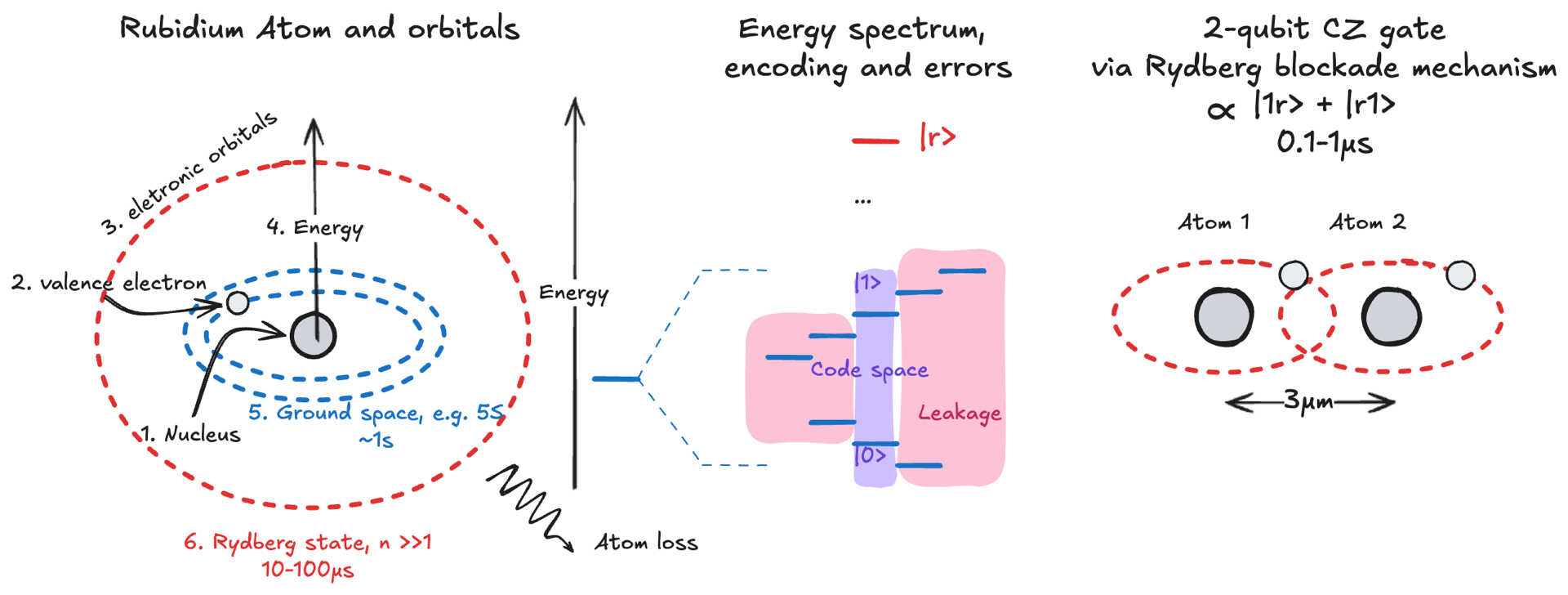
  • Atom (open quantum system) vs qubit (two-level system)
    • Pauli errors in the computational space
    • Leakage: Population in \(\ket{5S_{1 / 2}}\) outside the codespace
    • Qubit loss

Sources of Atom loss

  • Heating that causes atoms to escape the optical traps,
  • Collisions with background gas particles,
  • Anti-trapping during an excitation to a Rydberg state, e.g. CZ gate (BBR, laser imperfection, Doppler, imperfect blockade regime)
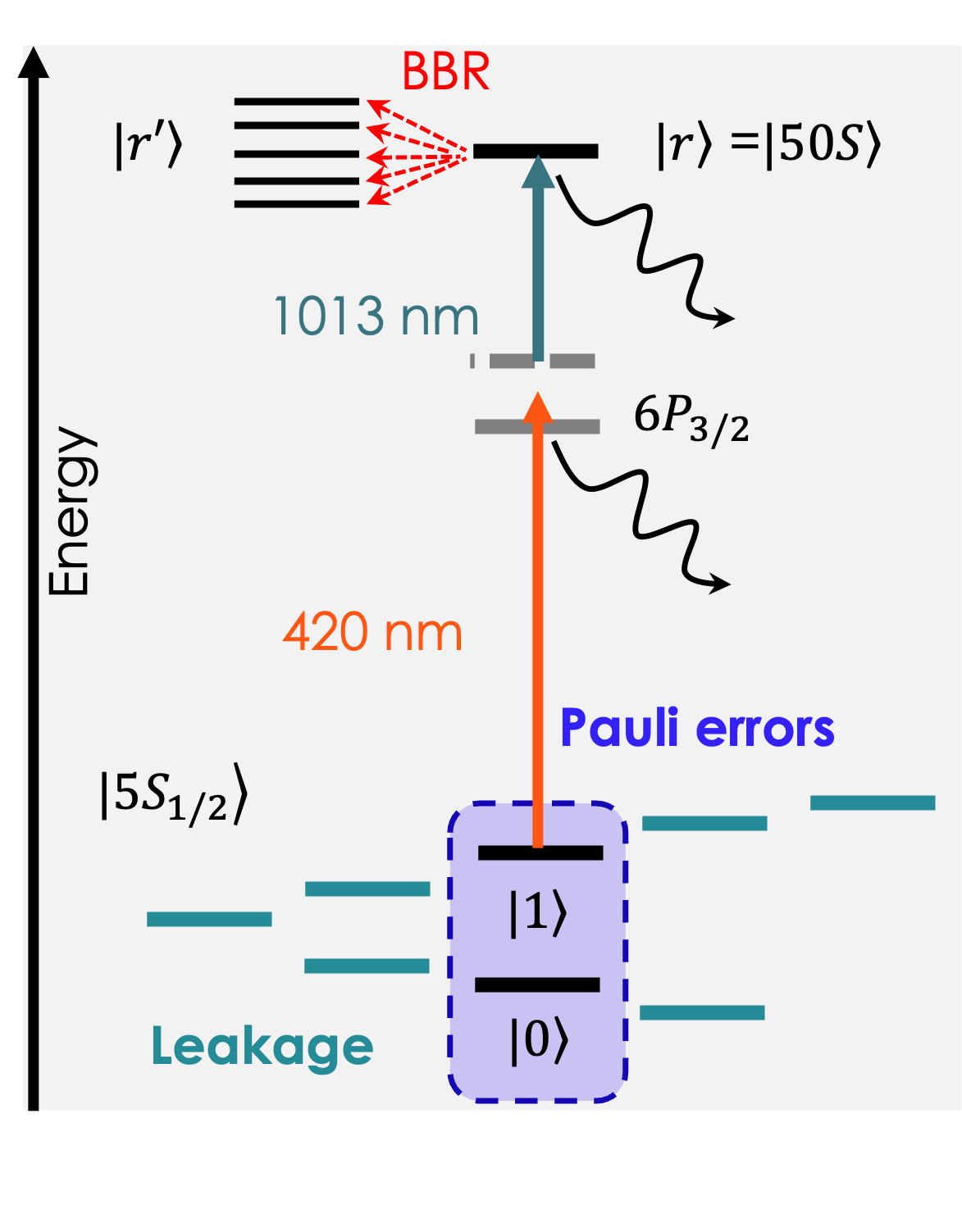
Figure 1: Energy spectrum and noise channels of the Rubidium atom. Errors in the groundspace \(\ket{5S1/2}\) are either Pauli (in the codespace \(m_F=0\) purple) or leakage (blue). When going to an excited state (eg Rydberg \(\ket{r=50S}\)), the atom can be lost.

Two-qubit (CZ) fidelity

Entangled-state error across platforms

Two-qubit (CZ) fidelity

Evered et al. (2026)

  • CZ fidelity of 99.854(4)% which improve to 99.941(3)% upon loss postselection
  • stable performance for 10 hours
  • creating and disentangling cluster states
  • Path to higher CZ fidelity:
    • higher laser intensities (\(\nearrow\) Rabi frequency \(\implies\) \(\searrow\) gate pulse duration)
    • no coupling to other Rydberg states
  • Expect 99.95% fidelity with current scheme
Qubit count

Evolution across platforms

Qubit count

Doubling ~1.4 yr : steepest slope of any platform

Array maturity stage

  1. Tweezer sites generated: array of optical traps, empty potential wells,
  2. Atoms randomly loaded: roughly 50-60% per site,
  3. Rearranged into a defect-free array: deterministic, gap-free lattice
  4. Defined and controlled as qubits e.g. gates

For neutral-atom experiments

  • Wang et al. (2026) (11,000): Stage 2 (loaded, not rearranged, not qubits)
  • Manetsch et al. (2024) (6,100): Stage 2 + qubit characterization, but not rearranged into defect-free
  • Lin et al. (2024) / Pichard et al. (2024) (~2,000): Stage 3 (defect-free rearranged arrays)

The other clock: algorithms

The target is moving toward us

Requirement improvements

  • 2019: 20M qubits, 8 h (SC)1
  • 2025: < 1M qubits in less than a week (SC)2
  • 2025: 19 million qubits in 5.6 days (2048-bit RSA factoring)3
  • 2026: 10k-100k qubits in \(10 - 10^4\) days (transversal, atom-native)45
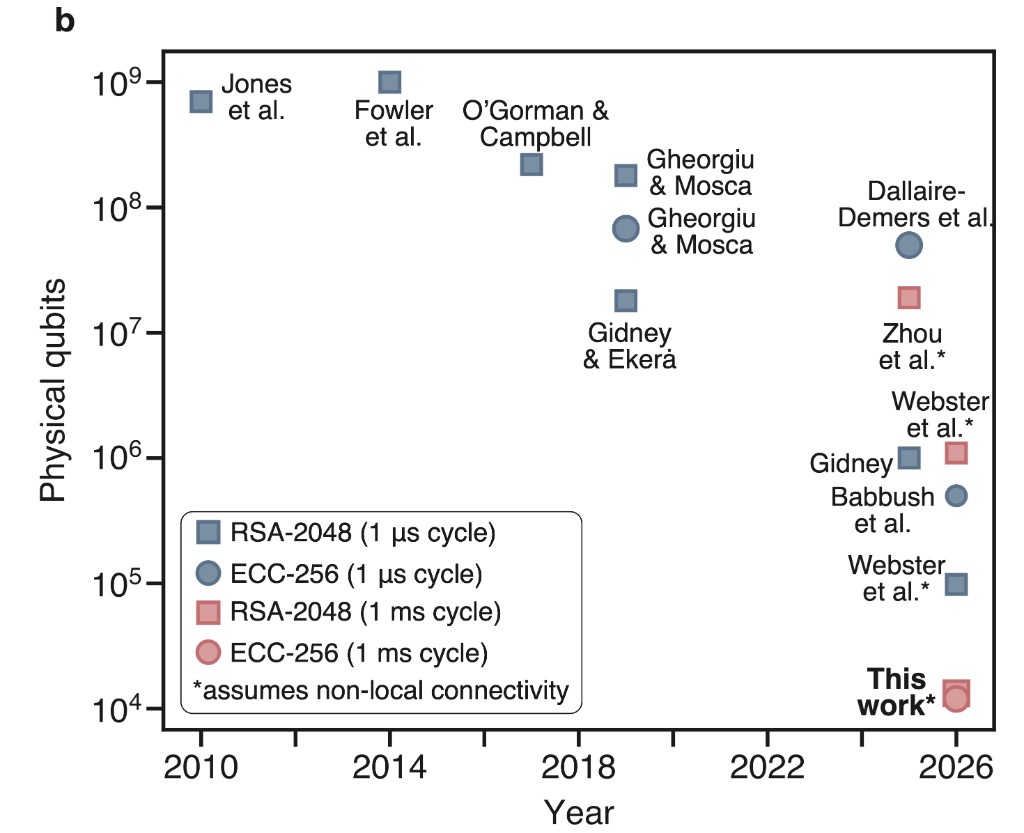
Physical qubit requirements for RSA-2048 and ECC-256 from Cain et al. (2026)

Q-day in 2029?

Comparing requirements1 and trends2